
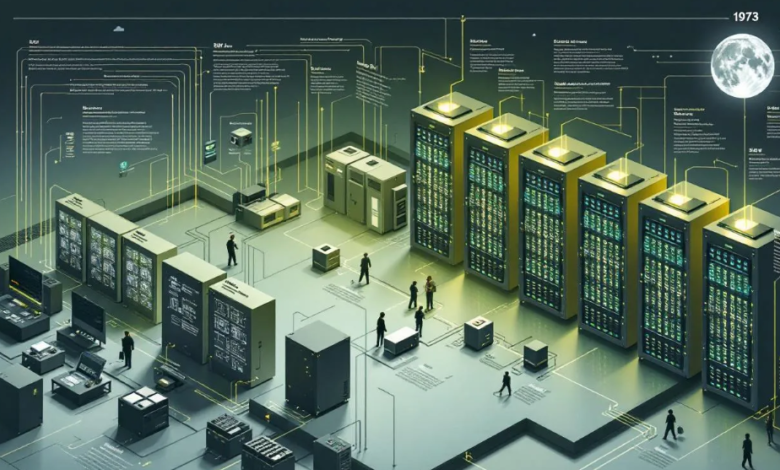
In today’s fast-paced digital world, businesses are constantly seeking efficient, scalable, and cost-effective ways to manage their IT infrastructure. One solution that has emerged as a game-changer is modular data center solutions. These innovative systems offer a flexible alternative to traditional data centers, providing organizations with the ability to scale, deploy, and manage their IT environments with unprecedented efficiency.
What Are Modular Data Center Solutions?
Modular data center solutions are prefabricated, scalable units that house IT equipment, power, cooling, and security systems in a compact and standardized format. Unlike conventional data centers, which require significant upfront construction and ongoing expansion costs, modular data centers are designed for rapid deployment and flexibility.
These solutions can be delivered in various formats, including containerized units, prefabricated modules, or room-based systems. Each module is fully equipped with the necessary infrastructure to support servers, storage, and networking equipment, making them ideal for businesses of all sizes.
See also: How Easy Installation Kits Are Changing Home Heating and Cooling
Key Benefits of Modular Data Center Solutions
1. Scalability
One of the primary advantages of modular data centers is their scalability. Organizations can start with a single module and expand by adding more units as their needs grow. This approach eliminates the need for over-provisioning and allows for a pay-as-you-grow model, optimizing both capital and operational expenditures.
2. Rapid Deployment
Unlike traditional data centers that may take months or even years to build, modular solutions can be deployed in a fraction of the time. Prefabricated modules are manufactured off-site, tested, and then shipped to the location, significantly reducing installation time and accelerating the path to operational readiness.
3. Cost Efficiency
Modular data centers reduce both capital expenditures (CAPEX) and operational expenditures (OPEX). By leveraging prefabricated components and minimizing construction costs, organizations can invest in infrastructure incrementally. Additionally, modular systems often feature energy-efficient designs, lowering electricity and cooling costs over time.
4. Flexibility and Customization
These solutions are highly customizable to meet specific business requirements. From power density and cooling systems to redundancy and security features, modular data centers can be tailored to suit unique workloads, compliance requirements, and operational strategies.
5. Enhanced Reliability
Modular data centers are designed with redundancy and fault tolerance in mind. Critical components such as power supplies, cooling units, and networking systems are built to ensure minimal downtime and high availability, safeguarding business continuity.
Applications of Modular Data Center Solutions
Modular data centers are versatile and can serve a wide range of industries and purposes:
- Enterprise IT Expansion: Businesses can scale IT capacity without the burden of building a new data center.
- Edge Computing: Modular units can be deployed closer to end-users to support low-latency applications and IoT ecosystems.
- Disaster Recovery: Rapidly deployable modules provide backup infrastructure for critical operations during emergencies.
- Telecommunications: Telecom operators can expand network coverage with localized modular data centers.
FAQs About Modular Data Center Solutions
Q1: How long does it take to deploy a modular data center?
Deployment typically ranges from a few weeks to a couple of months, depending on the size and complexity of the modules. This is significantly faster than traditional brick-and-mortar data centers.
Q2: Are modular data centers energy-efficient?
Yes, modular solutions often incorporate advanced cooling technologies and optimized power systems to reduce energy consumption and operational costs.
Q3: Can modular data centers be relocated?
Many modular systems, especially containerized units, are designed for mobility and can be relocated or redeployed as business needs change.
Q4: Do modular data centers support high-security requirements?
Absolutely. They can be equipped with physical security measures, access control, surveillance, and environmental monitoring to meet stringent security standards.
Q5: What industries benefit most from modular data center solutions?
Industries such as finance, healthcare, telecommunications, cloud service providers, and government agencies benefit greatly due to scalability, reliability, and cost efficiency.
Conclusion
Modular data center solutions are redefining how businesses approach IT infrastructure. With their scalability, rapid deployment, cost efficiency, and flexibility, they provide a practical alternative to traditional data centers. Whether for enterprise expansion, edge computing, disaster recovery, or telecommunications, modular data centers offer a future-proof solution that adapts to evolving business demands. Investing in these solutions ensures organizations remain agile, resilient, and ready to meet the challenges of the digital era.


